In short
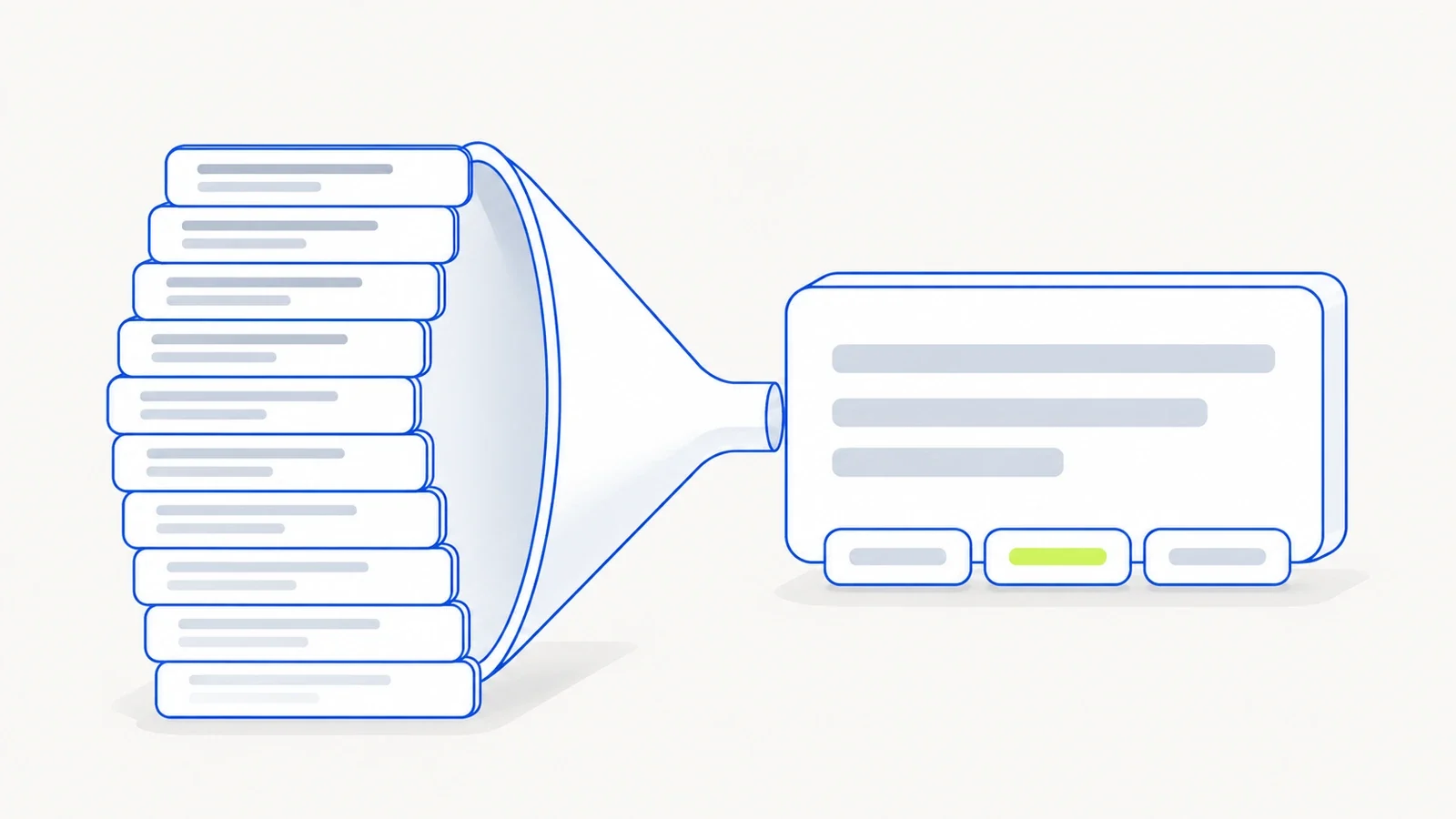
When search answers instead of listing links, the basics of SEO still apply, but the unit that wins becomes the passage rather than the page. Questions get longer, clicks fall, mentions of your brand matter more, and several AI engines matter as well as Google.
For twenty years the goal of search optimization was clear: rank as high as possible on a page of results and earn the click. Answer engines change the shape of that page. Instead of a list, the user gets a written answer with a handful of cited sources, and often reads no further.
That raises an obvious question for anyone who has invested in SEO: does it still work, and what needs to change? This article compares SEO and answer engine optimization point by point, and suggests how to adjust an existing strategy without starting over.
What stays the same
More than many headlines suggest. Answer engines that search the web in real time find their sources through search indexes. Google states that the only requirement to appear as a link in its AI Overviews and AI Mode is that a page is indexed and eligible to be shown in Search with a snippet, with no special optimization needed (Google Search Central).
So the foundations still apply: pages that can be crawled and indexed, a sensible site structure, content that genuinely answers what people search for, and a reputation that makes other sites mention and link to you. A site that is weak at SEO rarely does well in AI answers.
What changes
The unit that wins is the passage
In classic search, the page ranks. In AI answers, a passage gets quoted. A model looking for an answer to “how often should I review flashcards” will pick the clearest two or three sentences it can find, wherever they sit on a page. Content that buries its answers under long introductions loses out to content that states them plainly.
Questions get longer and more specific
People type short keywords into a search box and ask full questions in a chat. Pew Research found that Google showed AI summaries for 8% of one- or two-word searches, but for 53% of searches of ten words or more, and for about 60% of questions beginning with “who”, “what” or “why” (The Decoder, on Pew Research). Content planning needs to start from those longer questions as well as from keywords.
Clicks become a weaker measure
In the same study, people clicked a regular result 8% of the time when an AI summary appeared, against 15% without one. A brand can be cited in an answer, shape a decision and receive no visit at all. Visibility in answers becomes a goal in its own right, alongside traffic.
Reputation counts beyond links
Backlinks remain important for search rankings. For AI answers, mentions of your brand across the web, including those without a link, also shape whether models see you as a credible source on a topic. We cover this in Knowing What AI Says About Your Brand.
More than one engine matters
SEO has long meant Google. AEO means Google’s AI features plus ChatGPT, Perplexity, Claude, Gemini and Copilot, each with its own crawler and its own way of choosing sources. The technical side of that is covered in Search Optimization When the Reader Is a Model.
Download the SEO to AEO comparison
SEO and AEO side by side on one page, with the adjustments to make to an existing strategy.
Free. We will also send you our newsletter about new courses and guides. Unsubscribe in one click.
How to adjust an existing SEO strategy
Audit your best pages for answers. For each page that matters, check that the main question is answered clearly in the first lines, and that each section opens with a direct answer before the detail.
Add the questions around your keywords. For each topic, list the questions people ask in full sentences. Forums, the “People also ask” box in Google and your own customer emails are good sources. Make sure your pages answer them.
Check what machines can read. Make sure important content is in the page’s text, not only in images, videos or content loaded by scripts. Check that your robots.txt file does not block the AI crawlers you want to reach you.
Track citations as well as rankings. Each month, ask the main assistants the questions that matter to your business and record whether you are cited. Over time this shows whether your work is changing anything.
Keep doing the basics. Technical health, useful content and a good reputation remain the base everything else stands on.
Where this fits
This comparison is part of our guide to being the answer AI gives. The free AEO course on Train Your Skills covers each of these changes in practical lessons. Start the course here.
Frequently asked questions
What is the difference between AEO and SEO?
SEO aims to rank pages in search results and earn clicks. AEO aims to have your content used and cited in AI-generated answers. AEO builds on SEO foundations and adds a focus on clear, quotable answers and wider brand reputation.
Do I need separate strategies for SEO and AEO?
Usually not. One content strategy can serve both if pages answer questions clearly, are technically accessible and are backed by a strong reputation. The differences are mostly in emphasis and in how you measure results.
Is keyword research still useful for AEO?
Yes, as a starting point. Keywords show demand. For AEO, extend them into the full questions people ask, including follow-up questions, because answer engines often break a query into several related questions.
Does structured data help with AI answers?
It helps search engines understand your pages, and Google advises keeping structured data consistent with the visible text. It is not a shortcut into AI answers on its own, and the content itself has to answer the question well.
Will AI answers reduce my website traffic?
For some kinds of query they already do, especially simple informational questions. Traffic from complex, commercial and transactional searches tends to hold up better. Being cited also builds awareness that can bring visits through other routes, such as direct and branded searches.
Sources
- Google Search Central, “AI features and your website”. developers.google.com
- The Decoder, “Pew finds that only 1 percent of users click a source link directly from Google’s AI Overviews”. the-decoder.com